
History Explainer Videos: Tell the Past as a Story
Upload an article, lecture notes or a chapter, and get a narrated video with a scene for every turn of the story.
Examples on this page (3)
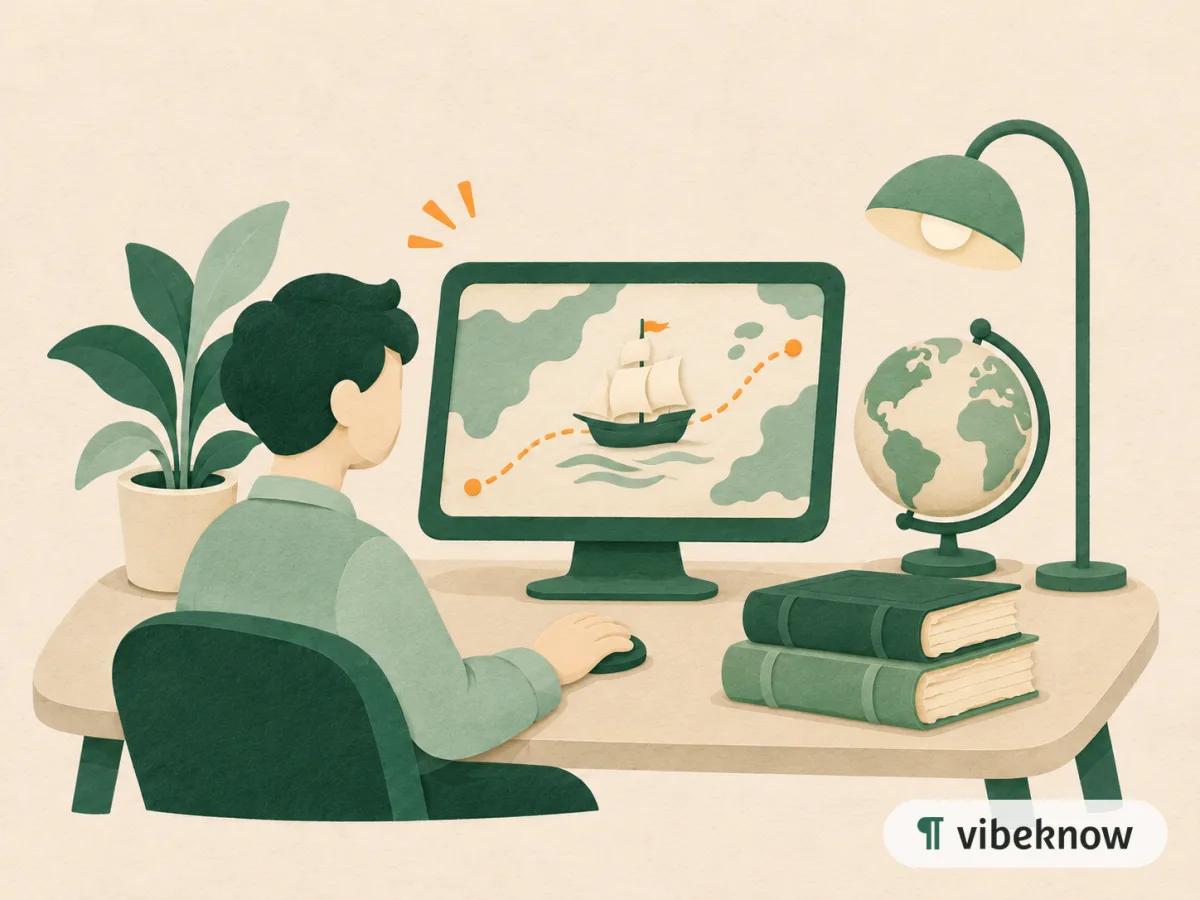
About this use case
A history explainer turns dates and names into a story people can follow: who, what changed, and why it still matters. Upload an article, lecture notes, a book chapter or your own script. VibeKnow writes the narration and illustrates each scene, from painted portraits to maps and archive-style pages. Check dates, names and figures before you publish.
Best for
- History teachers
- YouTube history channels
- Museums and heritage sites
- Culture and food creators
- Podcasters adding video
What's in “Coffee's Global History: Trade, Religion and Empire”
- Coffea arabica grows wild in southwestern Ethiopia; the story of Kaldi the goatherd is later folklore.
- The first credible evidence: Sufi communities in 15th-century Yemen drinking it to stay awake for night-time devotions.
- Coffeehouses spread across Ottoman cities, then to Venice, Oxford and London.
- London coffeehouses became places to insure ships and trade news; Lloyd's of London traces its origins to one.
Made with VibeKnow and shown in full.
History is remembered as a story
Ask people what they remember from history lessons and they rarely list dates. They remember a story: a merchant, a ship, a decision that changed what came next.
A history video turns your article or lecture into that kind of story, with a scene for every turn. Dates and names still appear, but they arrive as part of what happened, not as a list to memorise.
How to make a history explainer video
 01
Upload your source
An article, lecture notes, a book chapter or your own script.
 02
Pick a look
Choose a style that suits the story, such as painted illustrations, archive paper, woodcut or ukiyo-e.
 03
Check and share
Review the narration and scenes, fix any detail, then download the MP4.
Start from what you have: Document to video · URL to video · Script to video
Ways people use history videos
Course introductions
Set the scene before students read the chapter.
History channels
One object, person or turning point per video.
Museum and library talks
Open a session with a short story of the collection.
Food and culture
How a dish, a drink or a custom travelled around the world.
Vertical series
Short 9:16 stories for Shorts and Reels.
How it compares with other ways to make a history video
Related use cases
View all use cases







FAQ
Questions about history explainer videos.

Which mode suits a timeline?
HTML Video lays out dates, maps and quotations on the page, like the coffee example; Hand-drawn sketches each scene, like the sushi example.
Can I quote a primary source word for word?
Yes. Use Script to video and paste the passage; the narration reads it exactly as written.
Can I split a long lecture into episodes?
Yes. Upload one section at a time, so each video tells one part of the story.
Can I make a version for students?
Yes. Put the age group in the prompt, for example “for 12-year-olds”, and the narration uses simpler words.
Which story from history would you tell first?
Upload your notes or article and watch the first version in minutes.